


How a Wedding Dress Comes Together
A finished wedding gown on the rail looks effortless, but it’s the end of a long process that starts before a single stitch goes in.
Fabric choice, pattern, structure, and finishing all happen in a particular order, and knowing what goes into it makes trying one on feel more special.
Learn more in this handy guide from Bijoux.

Choosing the fabric first
Every gown starts with fabric, and the choice shapes everything that follows. No matter whether you are choosing from our Made to Order, Quick Delivery, and Off-the-Peg collections.
Silk in its many forms, mikado, crepe, and chiffon among them, gives a different weight and drape depending on how it’s woven. Tulle and organza, meanwhile, add volume without adding weight.
Weight, drape, and texture
Lace brings texture and detail on top of a base fabric, whether that’s a delicate chiffon underlay or a structured satin. Heavier fabrics like mikado and taffeta hold their shape alone, while a softer crepe or georgette relies more on the cut to create movement.
Budget and fabric quality
Cotton and polyester fabrics show up further down the price range, often as a lining. They’re also a more accessible alternative to silk fabric for brides working to a budget or allocating their budget on other important elements of their wedding day and honeymoon.
Silk satin and silk organza sit at the higher end for their natural sheen and drape. A ball gown in particular tends to need a lot of fabric in the skirt alone, whichever textile is chosen.
Pattern and toile
Before real fabric gets cut, designers make a toile, a test version sewn in cheap, plain fabric that mirrors the intended pattern exactly.
It’s how a design gets tested and adjusted without risking expensive silk or lace on a fit that isn’t quite right yet.
Creating the pattern is part of the design process where the gown gets worked out on paper and in muslin. This happens before fabric is touched.
Any changes are easier to make at this point than once real fabric is involved, which is exactly why designers rarely skip it.
Shaping the bodice
Structured vs unstructured bodices
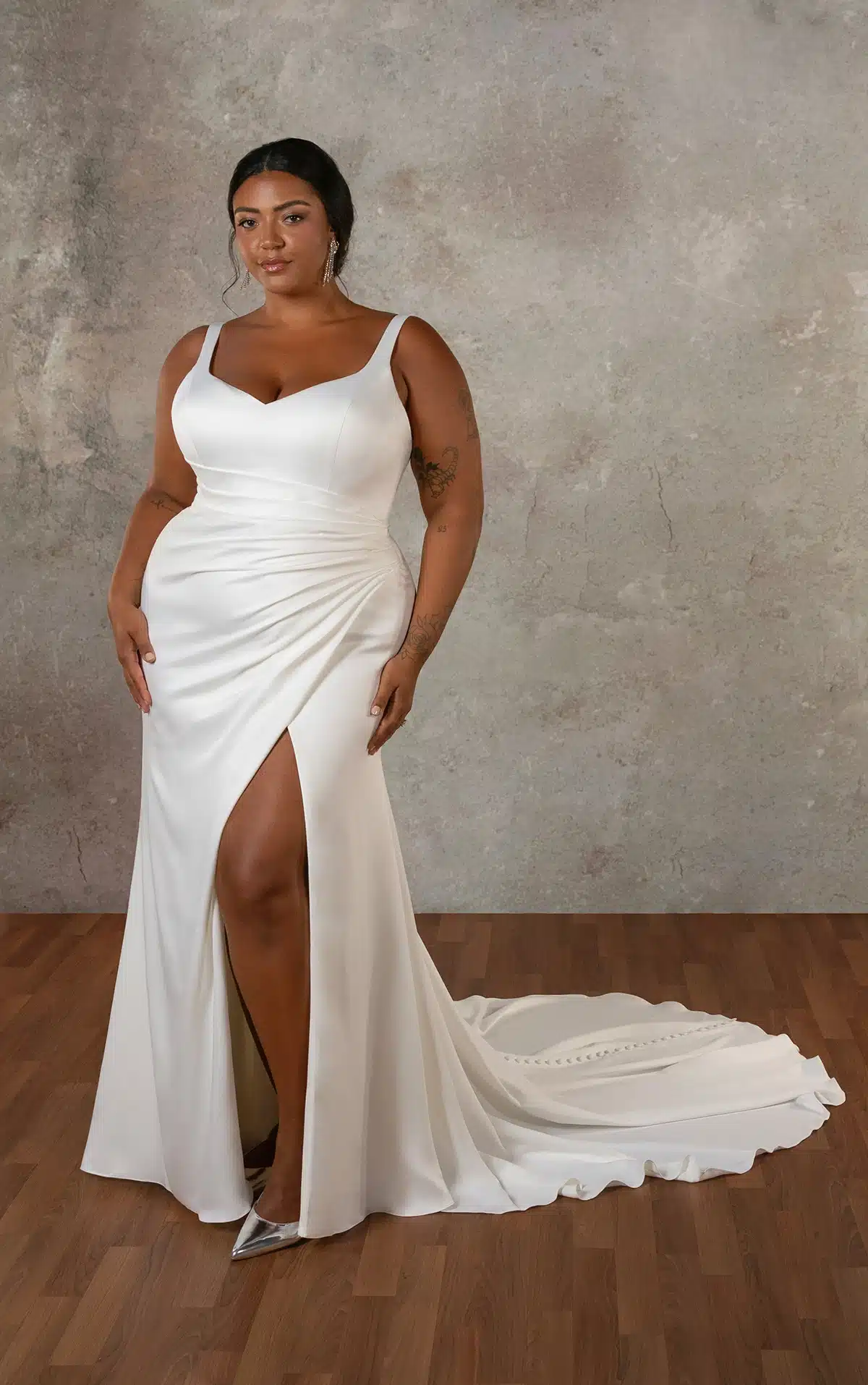
Once the pattern is confirmed, attention turns to the bodice, where most of the gown’s shape comes from.
A structured design uses boning stitched into the seams, sometimes supported by an internal corset layer. This lets the bodice hold its shape alone, rather than depending on the body underneath.
An unstructured bodice is designed with far less internal support, relying instead on the drape of the fabric itself.
Either way, the neckline and bodice shape are usually finalised before the rest of the skirt comes together. So much of the overall look depends on getting that part right first.
What’s underneath
A petticoat underneath can add fullness to the skirt without relying on the bodice alone. The bone used in a structured bodice today is typically a lightweight plastic.
It’s a much more comfortable alternative to the whalebone historically used for the same job!
A supportive lining, sometimes two layers of fabric stitched together and treated as one, gives delicate outer fabrics like lace or chiffon extra stability.
They wouldn’t have that stability on their own. It’s an unglamorous detail, but it’s often what makes a beautiful fabric wearable for a full day.
Sewing, embellishment, and finishing
Embellishment and hemming
With the pattern and structure settled, the pieces are sewn together. This is where embellishment gets added, whether that’s beading, sequins, or hand-applied lace along the bodice, neckline, or hem.
Fine details like this are often finished by hand rather than machine. That’s part of why a heavily embellished gown takes longer to complete than a simple silhouette.
The hem is one of the last details finished, since it depends on the finished gown’s drape rather than the pattern alone.
A rolled or hand-finished hem is a small detail. But it’s the kind of thing that shows in how a dress moves and sits once it’s being worn.
Hand-finished craftsmanship
Craftsmanship really shows at this stage. A couture atelier finishes embellishment entirely by hand.
Even at a more accessible price point, a skilled tailor pays close attention to how lace motifs line up across a seam.
Fittings, from first to final
Made to order and quick delivery
Made to order gowns are cut and sewn to your measurements from the designer’s pattern block, so there’s no fitting at the atelier.
Everything is built to your numbers from the start, with your first fitting happening once the finished dress arrives.
Quick delivery gowns work the same way, just on a faster timeline.
Designers use fabric and patterns they already hold in stock, rather than cutting from scratch for a specific order. It suits brides working to a tighter date without giving up a dress that was made especially for them.
Off the peg, and your fitting at Bijoux
Off the peg gowns are the fastest route of all. These are sample-sized dresses you can try on and take home the same day.
Alterations then do the work that measurements would otherwise handle in a made to order gown.
Whichever route you choose, the fitting that matters most happens once your gown arrives at Bijoux.
Our independent seamstress handles that fitting and any alterations your dress needs for your body and your day, bustling included. That’s how it fits exactly as it should when you wear it.
Finding your special gown at Bijoux
Understanding what goes into a gown makes the wait even more special.
It’s less like time passing and more like your dress being made especially for you. Our stylists can talk you through fabric, silhouette, and personalisation options at your appointment.
That moment when you finally try it on, the gown that took months to become real, is worth celebrating properly. Our stylists will be right there with you, and so will everyone you’ve brought along to share it.
Book your appointment at Bijoux Bridal in Hamilton and start the journey toward a gown made just for you.

