


A Bridal Guide to Popular Wedding Dress Fabrics
The fabric your wedding dress is made from shapes everything about how it looks, moves, and photographs.
Two bridal gowns in the same silhouette can feel completely different depending on the wedding dress material.
Getting to know the popular wedding dress fabrics before you start wedding dress shopping means you’ll walk into your first bridal appointment knowing what you’re looking at.
This is your guide to the fabrics and materials that run across bridal fashion today, and the look each one creates.

Popular Wedding Dress Fabrics in Our Made to Order Collection
Satin
Satin is one of the most popular wedding dress fabrics of all time and the fabric of choice for formal bridal gowns for decades.
The defining quality of satin is its surface: smooth, cool to the touch, with a high-lustre finish on one side and a matte reverse.
The look satin creates depends on whether the fabric is silk satin or polyester satin. Silk satin has a softer, more fluid drape and a luminous quality that photographs beautifully.
Polyester satin is crisper and more structured, and a high-quality polyester satin is difficult to distinguish from silk in a finished gown.
Either way, satin wedding gowns read as polished and occasion-worthy.
The smooth fabric holds structure well, which suits ballgown skirts, fitted mermaid or fishtail silhouettes, and dramatic trains.
It’s also a common base layer beneath lace gowns, providing both structure and a clean backdrop for the lace overlay.

Lace
Lace is used as an overlay, appliqué, or full covering over a base fabric rather than as a standalone material.
It’s among the most popular bridal fabrics across all dress styles, appearing in every bridal dress style from traditional to contemporary at every price point.
The look lace creates depends on the type used.
Chantilly lace is fine and romantic, with delicate florals on a mesh ground. Guipure lace is heavier and sculptural, with a bold raised pattern and no mesh background.
Most lace fabrics are made from silk or synthetic fibres, and both varieties appear across popular bridal collections.
Lace works over satin, crepe, and tulle, and the base fabric changes the result.
A lace gown over a satin base reads formal and polished. Over tulle, the same lace becomes softer and more romantic, with the skirt taking on a lighter quality.
Crepe
Crepe is a fabric characterised by its slightly textured, matte surface and fluid drape.
Unlike satin, it doesn’t reflect light, giving gowns a cool, understated quality that works particularly well in minimalist designs and clean silhouettes.
Crepe is a versatile fabric across a range of dress styles.
Its natural drape suits column and sheath gowns, where the fabric falls close to the body without bunching.
Heavier crepe works well in structured skirts, while lighter crepe creates a more fluid, layered effect.
Georgette is a lighter, sheerer fabric similar to crepe in its matte texture but with more movement and flow.
It’s used in layered skirts and flowing silhouettes, and in contemporary bridal fashion, crepe and georgette are among the most popular fabrics for brides who want a modern, unfussy bridal look.

Tulle
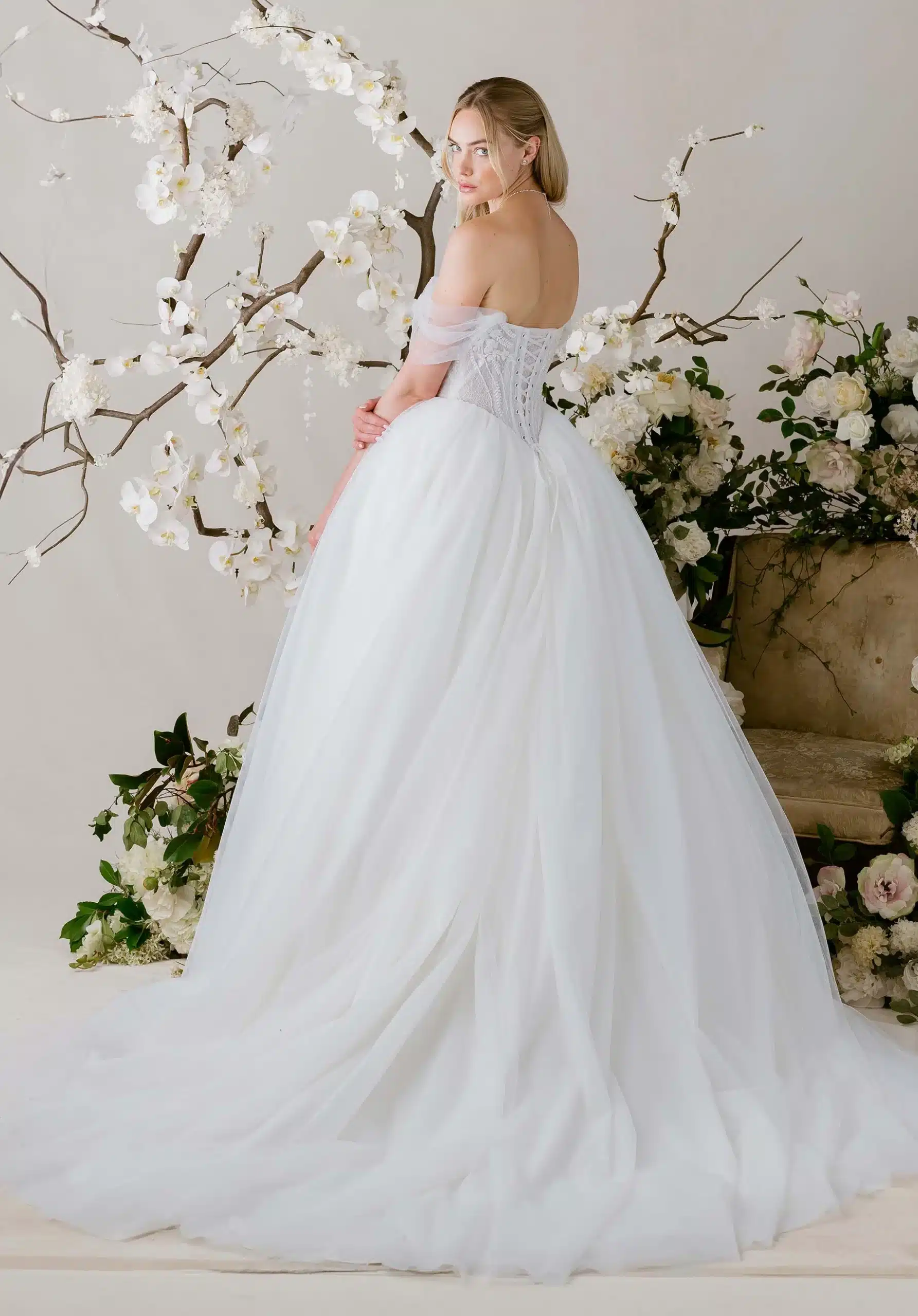
Tulle is a fine, net-like fabric made from thin filaments of nylon or silk.
In a single layer it reads as sheer and near-weightless, but layered multiple times it adds significant fullness to ball gowns and creates the voluminous, dramatic skirts associated with princess-style silhouettes.
The look tulle creates depends on how it’s used. Stiff layers produce a full, graphic skirt with real presence. Softer tulle, layered more gently, creates the cloud-like skirts associated with romantic ballgowns.
Tulle is also used as an underskirt to add fullness to ball gowns without adding visible bulk to the outer fabric.
Tulle is the bridal fabric of choice for veils, where its fine mesh allows the face and gown beneath to show through clearly. A veil made in the same tulle as the skirt reads as a fully coordinated bridal ensemble.
Chiffon
Chiffon is a sheer, airy fabric with a fine, slightly grainy texture and a naturally floaty movement.
Often described as ethereal, it creates a look quite different from structured fabrics like satin or organza. Fabrics like chiffon move with the body rather than holding shape around it.
Chiffon is the ideal fabric for summer weddings because of how lightly it sits on the body.
Sheer and lightweight like chiffon, it layers beautifully: multiple panels build up softly into a full, floating skirt, while a single layer creates a more minimalist, close-to-the-body look.
Silk
Silk is a natural fibre and the material from which many of the most luxurious bridal fabrics are woven.
It has a unique combination of qualities: strong for its weight, naturally breathable, and with a surface that responds to light in a way synthetic alternatives struggle to replicate.
Silk fabric comes in several distinct weaves that each create a different visual character.
Silk charmeuse has a liquid, close-to-the-body drape. Dupioni silk is thicker and textured, with a subtle iridescent sheen.
Silk mikado is heavier and holds structure well, making it the ideal fabric for structured gown silhouettes.
It’s the basis of many made-to-order designer gowns, including custom wedding designs where the silhouette is built around the fabric’s properties.
The luxurious look and feel that silk creates is difficult to achieve with synthetic alternatives, though high-quality silk-blend fabrics used by designer bridal houses come close.
For brides who want pure silk, a made-to-order wedding gown is the most reliable route to the real thing.
Organza
Organza is a crisp, structured, sheer fabric that shares chiffon’s transparency but holds its shape rather than flowing.
Where chiffon floats, organza stands out from the body, making it well-suited to structured overlays, dramatic sleeves, and full skirts with a defined, stand-away silhouette.
The look organza creates is polished and architectural.
It can add fullness to ball gowns without the softness of tulle, giving skirts a stiffer, more graphic shape.
A smooth fabric beneath, such as satin or crepe, usually provides the base, with organza used as the structured outer layer.
Organza is also used in smaller design details: bows, overskirts, and peplum layers where a fabric needs to hold its shape rather than drape.
In lighter bridal fashion, organza and chiffon are often described together as the two main sheer wedding fabrics, with organza being the structured option.
Mikado
Mikado is a heavy, smooth fabric with a slight sheen and a structured quality that holds its shape without boning or extensive interior support.
It’s made from silk or synthetic fibres, and the high-quality fabric produces clean, sculptural lines that photograph with a strong, graphic presence.
The look mikado creates is sleek and contemporary. It’s the fabric of choice for column and sheath gowns, where the dress needs to hold its silhouette cleanly without softening into folds.
Mikado also works in fit-and-flare styles, where the structured bodice design contrasts with a relaxed skirt below the knee.
Unlike charmeuse or chiffon, mikado doesn’t rely on movement to create its effect.
The fabric is characterised by its stillness, which makes it a strong choice for brides who want a gown that reads as intentional and precise rather than romantic and flowing.
Taffeta
Taffeta is a crisp, tightly woven fabric with a smooth surface and a natural resistance to creasing.
Unlike the fluid drape of crepe or charmeuse, taffeta holds its shape firmly and gives ballgown wedding dresses their characteristic volume and structure.
The defining quality of taffeta is its presence: the fabric produces a soft rustle when worn, a detail associated with the drama of a formal bridal gown.
Taffeta creates a traditional, ceremonial look that suits structured settings and formal wedding themes particularly well.
Taffeta is less common in contemporary bridal fashion than it was in previous decades, though it remains the ideal fabric for a genuinely dramatic silhouette.
Duchess satin and taffeta are the two fabrics most commonly associated with that characteristic structured, formal ball gown form.
Charmeuse
Charmeuse is a lightweight satin-weave fabric with one silky smooth side and a matte reverse.
Like satin it has a slight sheen, but charmeuse is much softer and carries a distinctive liquid drape that causes it to follow and move with the body rather than holding structure around it.
Many charmeuse gowns are cut on the bias, meaning the fabric is cut diagonally across the grain rather than straight.
This allows the fabric to cling gently and follow the natural lines of movement, creating a fitted, flowing bridal look quite different from stiffer fabrics.
Charmeuse suits simple, column-style and sheath gowns, where the fabric’s natural movement is the main feature.
It’s the perfect fabric for brides who want a sleek, understated look without the rigidity of structured satin, and it’s a fabric similar to silk in its feel even when made from synthetic fibres.
Brocade and Jacquard
Brocade is a heavy, richly patterned fabric woven on a jacquard loom, where the design is built into the weaving rather than printed onto the surface.
The result is a fabric with a raised, three-dimensional texture and a weight unlike any other wedding dress material.
Jacquard fabric carries florals, damask patterns, and geometric designs, and the look brocade creates is formal, rich, and opulent.
Brocade is less common in contemporary bridal fashion than lighter fabrics, but it remains a luxurious fabric for brides who want a gown with genuine drama and historical presence.
A brocade ball gown has a grandeur that lighter fabrics can’t achieve.
The weight and texture of the fabric commands attention in a ceremony setting, and the pattern in the weave catches light across the surface in a way that photographs with real richness and depth.
How Fabric Shapes Your Bridal Look
When it comes to wedding dresses, fabric shapes everything from how the gown moves to how it photographs on the wedding day.
A romantic, layered look draws you toward tulle and lace. A modern, architectural look suggests crepe or mikado. A dramatic, opulent feel suggests satin or brocade.
The wedding theme and venue play a role in fabric selection, and different wedding aesthetics call for different fabrics.
Taffeta or brocade suit a formal, cathedral setting.
Materials like chiffon or lightweight silk work well for a summer wedding. Crepe crosses both contexts, which is why minimalist designs in crepe have become popular in contemporary bridal fashion.
Fabric Beyond the Gown
Fabric choice also extends beyond the gown itself.
The fabric of a wedding veil is usually matched to the skirt fabric, so a tulle gown typically pairs with a tulle veil, while a chiffon or silk gown pairs with a softer, more draped veil.
Bridesmaid dresses often coordinate in fabric too, and choosing your bridal fabric first can make the wider bridal ensemble feel coherent.
White and Ivory
White and ivory are the two most common colours for wedding dress fabrics, and the fabric itself affects how these tones appear.
Satin makes bright white appear more stark. Crepe and silk satin soften both white and ivory toward a warmer finish.
Ivory works particularly well across matte fabrics, where the warm undertone reads as rich and considered.
Choosing Your Bridal Fabric at Bijoux
Browsing fabrics online is useful starting research, but no description captures how a fabric actually looks and feels when you’re wearing it.
The weight, the movement, and the fabric features a photograph can’t convey are the things a bridal appointment is for.
The fabric makes a bigger difference in person than on a screen, and understanding that is half the reason to try gowns on rather than choosing from a catalogue. Our stylists offer expert advice across a full range of bridal fabric types.
We’ll pull together a selection of gowns in the different fabrics, necklines, and silhouettes that match the bridal look you’re drawn to, so choosing the right fabric becomes clear when you try them on.
Our range of bridal fabric includes high-quality satin, lace, crepe, tulle, chiffon, and more, drawn from hundreds of designer gowns in the boutique and across a wide variety of sizes.
Book your appointment at Bijoux Bridal in Hamilton and start your bridal journey toward your dream wedding dress.

